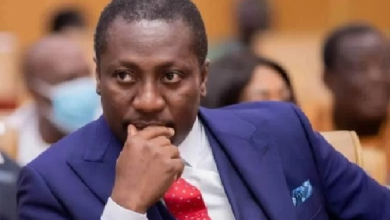
Gov’t targets rural areas in 4G and 5G network upgrade- Sam George
The government is prioritising rural communities in the ongoing upgrade of Ghana’s telecommunications infrastructure from legacy 2G and 3G technologies to 4G and 5G-capable networks.
Minister for Communication, Digital Technology and Innovations, Samuel Nartey George, disclosed this during the Government Accountability Series, saying the initiative forms part of efforts to close Ghana’s digital divide and provide reliable connectivity to underserved communities.
According to Mr George, a significant number of cell sites serving rural and remote communities still operate on 2G and 3G technologies.
While the older technologies are adequate for basic voice calls and text messaging, he said they are increasingly unable to support the range of digital services required in Ghana’s growing digital economy.
“A farmer in a 2G community can call the markets to ask about prices, but she cannot, on that same connection, list her products on a digital marketplace or receive a real-time weather advisory,” Mr George said.
He said the government was therefore working with the Mobile Network Operators, the Millennium Development Authority (MCA) and other relevant stakeholders to upgrade ageing infrastructure in rural districts.
The upgrades will include the modernisation of existing masts and infrastructure to make them 4G and 5G capable, alongside improved fibre and microwave backhaul systems.
Increased investment in network expansion
The Minister said the rural upgrade programme is being supported by increased investment from telecommunications operators.
He disclosed that MTN Ghana has committed more than US$1.1 billion over the next three years, including approximately US$380 million in 2026, to expand coverage, deploy new sites and support its 5G rollout.
MTN, he said, has planned 800 new cell sites in 2026, described as the company’s highest annual site build in a decade.
Mr George said 180 of those sites were already active and carrying traffic, with the locations targeted particularly at rural and peri-urban communities where network challenges have been more pronounced.
He added that the government had worked with Members of Parliament to identify areas within their constituencies experiencing significant network challenges to help guide the deployment of new sites.
Telecel expands 4G coverage
The Minister also disclosed that Telecel Ghana had increased its capital investment by about 60 percent over the 2023–2026 period compared with the preceding four years.
Under its 2026 plan, Telecel is targeting 2,698 sites, of which 1,890 had already been completed and made 4G-compliant, he said.
Mr George said the increased investment demonstrated that the government’s regulatory and policy measures were helping to encourage greater private-sector investment in telecommunications infrastructure.
Beyond simply having a signal
The Minister stressed that the government’s objective was not merely to increase the number of communities with a mobile signal but to ensure that people have access to networks capable of supporting modern digital services.
He said reliable 4G and 5G connectivity was increasingly important for mobile money transactions, digital banking, e-learning, telemedicine, digital agriculture, e-commerce and other online services.
He noted that Ghana’s smartphone penetration had reached 71.8 percent as of June 2026, up from 27.5 percent a decade ago.
According to Mr George, the growth in smartphone ownership means more Ghanaians are relying on telecommunications networks for work, business, education and everyday activities, making continued investment in network capacity essential.
Fibre cuts remain a challenge
The Minister, however, warned that network expansion could be undermined by persistent damage to fibre infrastructure.
He said Ghana had recorded nearly 4,300 fibre cuts by the end of June 2026, with road construction accounting for about 49 percent of the incidents.
Illegal mining and private development activities were also identified as significant causes.
Mr George said government was working on a coordination framework that would require road agencies and contractors to engage telecom operators before excavation works begin.
He also announced plans for a “Dig Once” policy, which would require road construction projects to incorporate dedicated fibre chambers to better protect critical telecommunications infrastructure.
He said the government would continue working with operators and regulators to strengthen network resilience and ensure that the benefits of Ghana’s digital transformation reach communities that have historically been underserved.