Mahama calls for renewed Non-Aligned Movement to champion global south
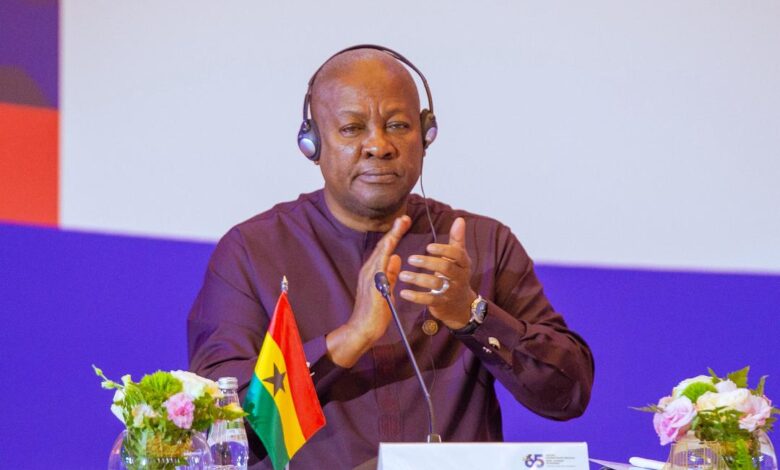
President John Dramani Mahama has called for a stronger and more action-oriented Non-Aligned Movement (NAM), urging member states to translate their shared principles into coordinated diplomacy and practical outcomes.
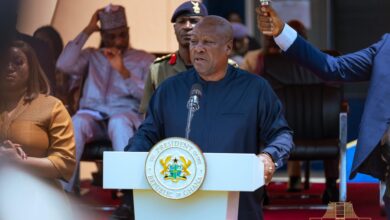
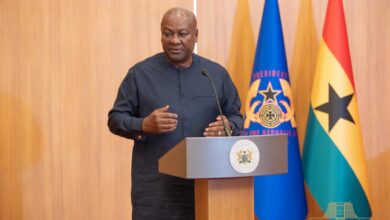
Addressing the 65th anniversary summit of the Non-Aligned Movement in Belgrade, Serbia, President Mahama said the movement must remain an independent collective voice for peace, dialogue, disarmament, development and justice amid growing geopolitical tensions.
He recalled Ghana’s historic contribution to the formation of NAM, highlighting the role of Ghana’s first President, Dr Kwame Nkrumah, at the inaugural Belgrade Conference in 1961.
According to President Mahama, Nkrumah’s declaration that “we neither face east or west, we face forward” continues to define Ghana’s approach to international relations.
“Ghana chose not to be drawn into the geopolitical rivalry between the power blocs. Ghana chose instead to look forward to peace, to sovereignty, and to the freedom of nations to determine their own destinies,” he said.
President Mahama said the world had changed significantly since the end of the Cold War, but developing countries continued to face pressures that threatened their strategic autonomy.
He identified renewed geopolitical competition, economic vulnerabilities, unequal access to finance and technology, climate change and inadequate representation of the Global South in international institutions as some of the major challenges confronting developing countries.
He stressed that non-alignment should not be interpreted as passivity or neutrality.
“Non-alignment must never be understood as neutrality in the face of injustice, conflict, or the erosion of international law,” President Mahama said.
He called for stronger coordination among NAM member states, particularly within the United Nations and other multilateral institutions, arguing that the movement’s influence should be measured not merely by its membership but by its ability to achieve coordinated diplomatic outcomes.
Ghana cites reparations resolution
President Mahama also cited Ghana’s recent diplomatic efforts at the United Nations as an example of what collective action can achieve.
He referenced the adoption of UN General Assembly Resolution A/RES/80/250 on March 25, 2026, which he said was led by Ghana and strongly supported by the African Union.
The resolution condemned the trafficking of enslaved Africans and the racialized system of chattel enslavement of Africans as the gravest crime against humanity and received 123 votes in favour.
Mahama expressed appreciation to NAM members for supporting Ghana and Africa during the process.
“Your solidarity affirmed the value of collective action and demonstrated what we can achieve when we come together in pursuit of justice and a shared sense of historical truth,” he said.
Mahama raises Sudan and Gaza crises
The President also used the platform to call for greater international attention to conflicts and humanitarian crises, particularly in Sudan and Gaza.
He described the situation in Sudan as the world’s largest and worst humanitarian crisis, citing widespread displacement, hunger and grave violations against civilians.
“The international community must give Sudan the sustained political attention, humanitarian support and commitment to peace that its people urgently deserve,” he said.
On Gaza, Mahama said the humanitarian situation remained catastrophic, with civilians facing severe restrictions on humanitarian access and shortages of food, water, healthcare and electricity.
He called for the protection of civilians and full and unhindered humanitarian access, while rejecting what he described as the selective application of the principles of the UN Charter.
Calls for end to Cuba embargo
President Mahama further reiterated Ghana’s opposition to the long-standing economic, commercial and financial embargo against Cuba.
He argued that unilateral coercive measures undermine sovereign equality and the principle of non-interference, while weakening the multilateral system.
Resource sovereignty and climate action
Turning to development, President Mahama said political independence must be accompanied by economic capacity and resource sovereignty.
He criticised the continued position of many Global South countries as exporters of raw materials and importers of finished goods, while bearing the environmental and social costs associated with resource extraction.
“Resource sovereignty must be at the heart of our development agenda,” he stated.
On climate change, the President called for a united response from NAM members, pointing to fires in southern Europe, drought and desertification in Africa, and severe flooding in parts of Asia as evidence of the growing climate crisis.
He said NAM must strengthen its advocacy and action on climate change while addressing emerging challenges including artificial intelligence, digital inequality and widening development gaps.
President Mahama reaffirmed Ghana’s commitment to working with NAM members to strengthen multilateralism, promote a fairer international order and ensure that the voice of the Global South carries greater weight in global decision-making.
“As we look to the future, our direction remains clear: Neither East nor West, but forward together,” he declared.