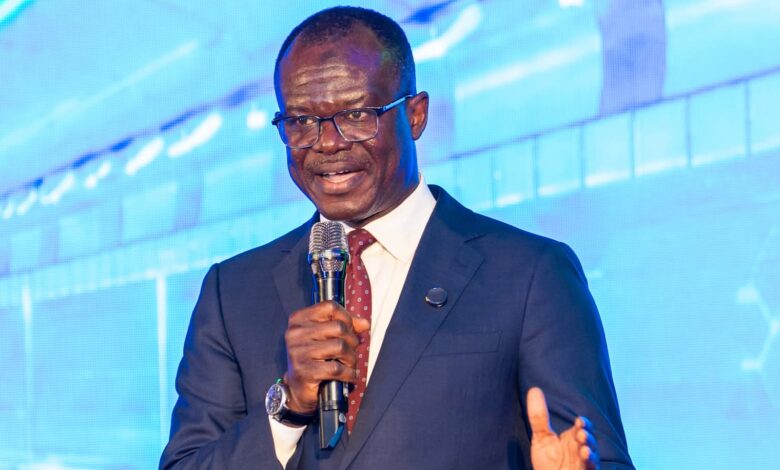
The First Deputy Governor of the Bank of Ghana, Dr. Zakari Mumuni, has charged statisticians, data scientists, and policymakers to turn Ghana’s abundance of data into timely, reliable and actionable intelligence for national development, warning that artificial intelligence cannot rescue bad data.
Delivering the keynote address on behalf of the Governor, Dr. Johnson Pandit Asiama, at the 4th Annual Statistics and Data Science Conference of the Ghana Statistical Association in Tamale on Wednesday, August 26, 2026, Dr. Mumuni said the greatest challenge for policymakers today is no longer data shortage but converting data into intelligence.
“The greatest challenge facing policymakers today is no longer a shortage of data. It is turning an abundance of data into timely, reliable and actionable intelligence,” he told participants gathered under the theme: “Innovations in Statistics and Data Science: Research, Practice and Policy Impact”.
He summed up his message in a simple formula: better data. Better decisions. Better outcomes.
Better Data Is Foundation
Dr. Mumuni, who spoke on three pillars, said for a central bank, statistics are not peripheral but are the mandate expressed in numbers. Good data, he noted, must be well-collected, trustworthy and relevant.
He paid tribute to field staff of the Bank of Ghana Research Department who track prices in markets across the country, including Tamale, and conduct business and consumer confidence surveys, often spending nights away from home so that the Monetary Policy Committee reasons from Ghana’s full economic experience, not Accra alone.
“No model rescues a forecast built on a thin foundation,” he stressed.
On quality, he warned that in the age of Artificial Intelligence, data integrity is even more critical.
“AI can process enormous volumes of data, but it cannot turn bad data into good data. If definitions are unclear, classifications inconsistent, or data poorly validated, even the most sophisticated model can produce misleading results. The old principle still holds: Garbage in, garbage out. In the age of AI: Bad data in, very sophisticated garbage out,” he said.
He said sampling, validation, metadata and revision remain fundamental, and that data must remain relevant through exercises like rebasing of GDP and Consumer Price Index, while responsibly governing new sources from payment systems, tax and telecom data.
Better Decisions Need Human Judgment
On turning data into intelligence, Dr. Mumuni said three things matter: statistical modelling, faster intelligence through technology, and human judgment.
He explained that the Bank’s Inflation Targeting framework is forward-looking, asking four questions at every MPC meeting: Where is the economy currently? Where is it heading? What could alter that trajectory? And what policy response is appropriate?
This, he said, is done through econometric techniques and the Bank’s Quarterly Projection Model within a Forecast and Policy Analysis System.
He revealed that the Bank has deployed AI and Big Data to develop its in-house electronic inflation nowcasting methodology called e-Inflation, and is using machine-learning models to complement standard models in forecasting GDP and text-mining analytics.
He said supervision is also evolving from static monthly spreadsheets to granular data validated as it arrives, allowing risks to be identified early.
“Technology matters when it closes the gap between when something happens and when a policymaker knows about it,” he said.
However, he cautioned that technology must strengthen, not replace human judgment, recalling the Governor’s February 2025 pledge to adopt a more proactive and precise approach leveraging advanced analytics.
“Technology can strengthen our intelligence, but it does not remove the need for human judgment. After all: People make policy,” he emphasized.
Better Outcomes Require Collaboration
Dr. Mumuni said the ultimate value of statistics is impact, which requires collaboration, stronger links between research and policy, and turning knowledge into action.
“No single discipline owns this future. The statistician asks whether a measure is valid. The economist asks what it means for behaviour. The data scientist asks what pattern it reveals. The technologist asks how to operationalise it. The policymaker asks what decision should follow. Each, working alone, produces something incomplete,” he noted.
He called for closer collaboration between universities and institutions like the Bank of Ghana and the Ghana Statistical Service, saying research should not only be about policy but conducted with policy.
He left the conference with three priorities: invest in data quality, embrace high-frequency and alternative data without abandoning statistical standards, and strengthen the bridge between research and practical policy questions.
“The future we should want is not one in which machines make our decisions for us. It is one in which better data guides better policymaking. A future where research translates into practice, evidence informs policy, and innovation produces meaningful impact,” he concluded.
The conference, hosted in Tamale in the Northern Region, has brought together government, academia, industry and international partners to deliberate on innovations in data.
Dr. Mumuni congratulated the Ghana Statistical Association for sustaining the platform.