Ghana, World Gold Council Sign $1 Million Deal To Formalize Artisanal Mining Sector
Gov’t Targets “Africa’s Responsible Gold Producer” Status With New Processing Plants
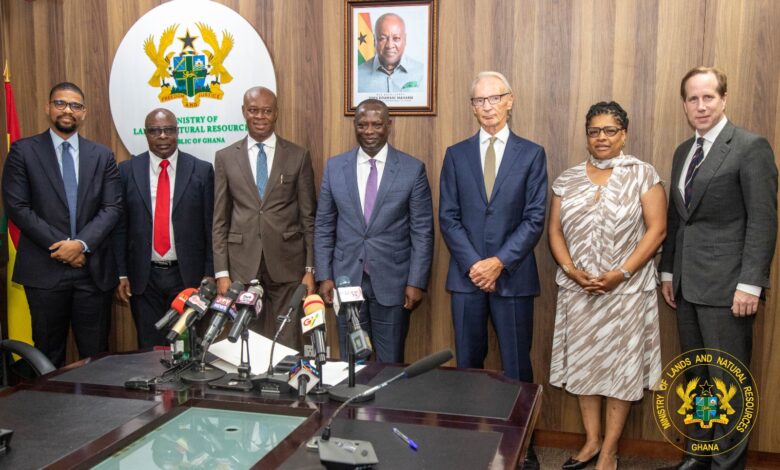
The Government of Ghana has signed a landmark Memorandum of Understanding (MOU) with the World Gold Council (WGC) to formalize the artisanal and small-scale mining sector, with an initial $250,000 development grant to establish accessible gold processing plants nationwide.
The deal, valued at $1 million in total program support, was announced by Minister for Lands and Natural Resources, Hon. Emmanuel Armah-Kofi Buah, during the signing ceremony in Accra on Tuesday.
The partnership is being positioned as a turning point for Ghana’s mining industry — moving the country beyond being just Africa’s largest gold producer to becoming “Africa’s responsible gold producer.”
Accessible Processing Plants For Artisanal Miners
Under the agreement, Ghana will set up gold processing facilities designed specifically for artisanal miners. According to Mr. Buah, the plants will operate to the “highest standards of responsible sourcing” and will offer “sufficient incentives to direct artisanal gold to the formal supply chain.”
“The goal is to make sure that all those backlines are all gone,” the Minister stated.
“The people who are doing artisanal mining will be given a chance to add value to what they are producing.”
He explained that the lack of regulated processing options has historically pushed many artisanal miners into informal and often illegal channels. By providing certified plants, government hopes to integrate these miners into the formal economy, improve earnings, and reduce environmental damage.
The Minister said the initiative aligns with government’s broader push to curb illegal mining, protect water bodies and farmlands, and ensure Ghanaian gold meets international responsible sourcing requirements.
$1 Million Program Under Cooperative Mining Initiative
The WGC’s support begins with an initial $250,000 development grant as part of a broader $1 million program of activities. The funding will be channeled through one of government’s flagship interventions, the Cooperative Mining Program.
Mr. Buah outlined that the collaboration will cover five key areas:
1. Policy and standards development to align local operations with global responsible mining benchmarks
2. Capacity building for artisanal mining groups and cooperatives
3. Support for traceability, including Norwegian verification technology solutions to track gold from source to market
4. Skills training for miners on safer and more efficient mining techniques
5. Educational support for mining communities on environmental protection and health
“The Government of Ghana and the World Gold Council intend to cooperate on policy and standards development, capacity building, support for traceability… as well as skills training and educational support to artisanal mining communities,” Mr. Buah said.
He described the MOU as reflecting “the parties’ shared commitment to unlocking the positive social and economic potential of responsible business,” while contributing to “community well-being, environmental protection, and the integrity of the gold industry.”
“This is a good path. You get a partner, and they believe in you so much… that actually puts a huge responsibility on us to make sure that we walk the walk and the talk as well,” he added.
“Ghana Is Trailblazing”: WGC To Roll Out Model Globally
World Gold Council Chief Executive Officer, David Tait, hailed Ghana’s initiative as a “trailblazing” model that the Council intends to replicate in other gold-producing countries.
“I think the most important thing is that Ghana is setting a trailblazing initiative here,” Mr. Tait said.
“Our goal as the World Gold Council is to roll out this gold processing initiative across the world with all countries that have artisanal mining.”
He noted that while challenges in the sector cannot be solved overnight, the Ghana model provides a long-term pathway. He described it as “fantastic and great for Ghana to be seen on an international stage taking this first step with us.”
Mr. Tait explained that the Gold Processing Initiative is built on three core pillars:
1. Verification technology to confirm the origin and legality of gold
2. Processing plants that meet environmental and safety standards
3. Centralized or official buying to ensure miners receive fair value and gold enters formal channels
“All of which Ghana has, and Ghana will grow further with us in that regard,” he stated.
Beyond economics, Mr. Tait stressed the environmental benefits, citing impacts on “the ecology, the construction of watercourses” that he said would have “material impacts on your world and on the worlds of many other countries.”
Call For Cross-Party Cooperation
In a key appeal, the WGC CEO urged Ghana to treat artisanal mining reform as a national, non-partisan issue.
“This is a cross-party problem. This is an issue that affects the entire country. This should not be divided along political lines,” Mr. Tait said.
“I would hope that we can perhaps create a forum… that bridges political divides and tries to solve this problem across party, with all the elements coming together. Because if we commit to do that, we will do it, and we must do it for Ghana. We must do it for other countries.”
He thanked the Minister and stakeholders, noting that “these things are never easy, but they are always worthwhile doing.”
What It Means For Ghana
The MOU comes at a time when government is intensifying efforts to formalize the artisanal mining sector, crack down on galamsey, and protect cocoa farms and water resources.
By providing legal, safe, and profitable alternatives, officials believe the processing plants will reduce the incentive for illegal mining while increasing government revenue and community development.
With Ghana producing over 4 million ounces of gold annually, the shift toward “responsible sourcing” is also expected to improve the country’s standing with international buyers and investors who are increasingly demanding ethical supply chains.