PIAC Boss Urges Public to Back Calls for Prosecutorial Powers to Strengthen Accountability
Story by Sampson Osei Sarpong

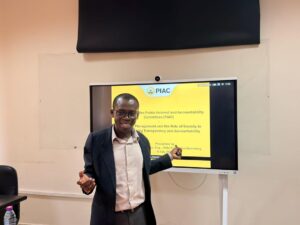
The Executive Secretary of the Public Interest and Accountability Committee (PIAC), Isaac Dwamena, Esq., has called on Ghanaians to lead advocacy efforts urging the government to grant PIAC prosecutorial powers to strengthen accountability in the management of petroleum revenues.
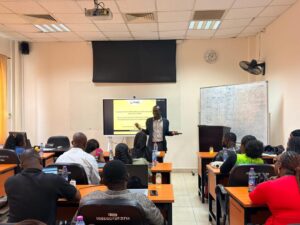
Speaking during the Africa Extractive Media Fellowship (AEMF) Cohort II workshop for selected journalists in Accra, Mr. Dwamena said granting PIAC prosecutorial authority would enable the committee to enforce its recommendations and prosecute individuals found to have mismanaged oil revenue meant for national development.
He explained that although PIAC has consistently monitored the use of petroleum revenues and reported cases of mismanagement, its effectiveness remains limited because it lacks the legal authority to prosecute offenders.
According to him, the committee currently only makes recommendations on the mismanagement and abuse of petroleum revenues and depends on Parliament and other state institutions to ensure their implementation, a situation he said has failed to deter the misuse of oil funds.
Mr. Dwamena revealed that several projects financed with petroleum revenues have been abandoned across the country, describing the situation as a major concern.
He cited a recent PIAC inspection visit to the Volta Region, where the committee sought to verify the construction of a bitumen road reportedly funded with petroleum revenues. However, he said the team found that no such road had been constructed.
The PIAC Executive Secretary also expressed concern over the use of GH¢2.6 billion in petroleum revenues by the previous government to support the Agenda 111 hospital project. According to him, only three hospitals have so far been completed despite the huge investment.
He further alleged that some development projects originally approved for specific communities had been relocated to other areas without PIAC’s knowledge, describing the practice as unfortunate.
Mr. Dwamena maintained that granting PIAC prosecutorial powers would strengthen transparency, improve accountability, protect public resources, and serve as a deterrent against the mismanagement of Ghana’s petroleum revenues.
He therefore urged citizens, civil society organisations, and other stakeholders to support legislative reforms that would empower PIAC to enforce its mandate more effectively.