Finance Minister Cassiel Ato Forson Briefs Parliament on Ghana’s Exit from IMF Programme
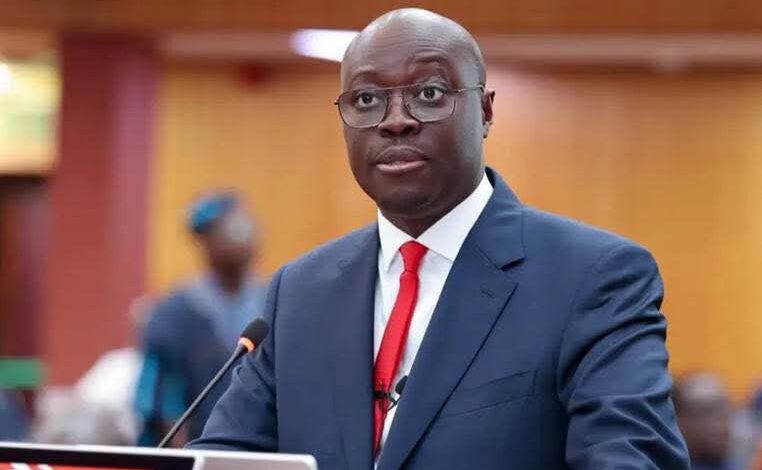
Finance Minister Hon. Cassiel Ato Forson has told Parliament that Ghana has concluded the final review of its current IMF financial bailout programme and will transition to a non-financing partnership with the Fund.
Briefing the House on May 28, 2026, Forson said the move marks the end of Ghana’s reliance on IMF financial bailouts and signals a shift from crisis management to economic stability.
He credited President John Mahama’s Reset Agenda for restoring macroeconomic stability and achieving debt sustainability ahead of schedule. Forson said Ghana has moved from dependence on bailouts to a reform-focused partnership under the IMF’s Policy Coordination Instrument.
From crisis to stability
Forson recalled the economic crisis of 2022, when fiscal, balance of payments and debt challenges led the previous administration to seek IMF support. He said inflation exceeded 50 percent, the cedi came under pressure, investor confidence fell, and Ghana lost access to international capital markets.
Credit rating agencies downgraded Ghana multiple times in 2022, with Moody’s, S&P and Fitch all cutting the country’s sovereign rating. In October 2022, Ghana lost access to the Eurobond market as spreads widened to 3,400 basis points.
He said the Domestic Debt Exchange Programme introduced in December 2022 imposed haircuts on domestic bondholders, including pensioners, banks and pension funds. Forson added that ordinary Ghanaians bore the brunt through currency depreciation, high inflation, job losses and new taxes.
Measures and results
Forson said the current administration recalibrated the IMF programme to ensure fairer burden-sharing and deeper structural reform. Measures included expenditure controls under the Public Financial Management Act, an audit of government arrears, the creation of GOLDBOD for foreign exchange stability, and the removal of nuisance taxes such as the E-Levy and Betting Tax.
He also reported cuts to the size of government, reducing ministers from 123 to 60 and ministries from 30 to 23. IPP renegotiations saved over $250 million and more than $1 billion in energy sector arrears were cleared, he said.
According to Forson, the measures have produced measurable results. Real GDP grew 6.0 percent in 2025, with non-oil GDP growth at 7.6 percent, the highest in 14 years. Ghana’s economy surpassed $100 billion in 2025, making it the 8th largest in Africa, with per capita income reaching $3,385.
The public debt-to-GDP ratio fell from 61.8 percent in 2024 to 44.7 percent at the end of 2025, meeting the 45 percent target ahead of schedule. Inflation declined from 23.8 percent in December 2024 to 3.4 percent in April 2026. The cedi appreciated 40.7 percent against the dollar in 2025, and the current account recorded an 8.3 percent surplus.
New IMF engagement
Forson said Ghana has completed the final review of the Extended Credit Facility, pending IMF Executive Board approval. Going forward, Ghana will engage the IMF under a Policy Coordination Instrument, a non-financing arrangement that provides regular policy reviews and signals reform credibility to investors.
“No further IMF financial bailout will be required in the foreseeable future,” Forson said. “We have evolved from a position of supplicant to one of partner.”
He added that a new economic programme, The New Economy, will be unveiled in the 2027 Budget. The plan will focus on job creation, productivity, resilience and broad-based prosperity.
Forson said President Mahama thanked Ghanaians for their sacrifice and patience, and pledged that the government would not be complacent in sustaining the gains.