Charles Owusu Juanah Esq. condemns arrests over political criticism
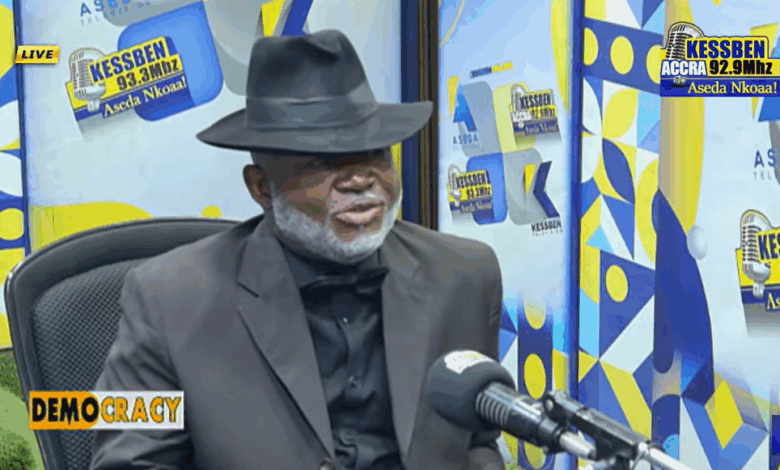
ON THE DANGEROUS CRIMINALIZATION OF FREE SPEECH AND THE GROWING THREAT TO CONSTITUTIONAL DEMOCRACY IN GHANA
Ladies and Gentlemen of the Media,
Fellow Ghanaians,
Distinguished Members of the Legal Fraternity,
Defenders of Democracy and Human Rights
Good afternoon.
I address you today with a heavy heart, but with an unshaken commitment to constitutional democracy, the rule of law, and the sacred liberties guaranteed under the 1992 Constitution of the Republic of Ghana.
Ghana has come too far in democratic development to descend into an era where citizens are arrested, intimidated, harassed, and detained merely because they expressed political opinions or criticized public officials.
Let me state emphatically from the onset that I do not support insults, abuse, or attacks on the personality of the President of the Republic or any public official.
Leadership deserves dignity. Public office deserves decorum. Political discourse must never degenerate into vulgarity, reckless abuse, or attacks on the humanity of individuals.
Indeed, Article 41(f) of the 1992 Constitution places a civic responsibility on every Ghanaian:
“To protect and preserve public property and expose and combat misuse and waste of public funds and property.”
This constitutional duty must be exercised responsibly, lawfully, and respectfully.
The Holy Bible also admonishes us in Exodus 22:28:
“Do not blaspheme God or curse the ruler of your people.”
Similarly, Ephesians 4:29
“Let no corrupt communication proceed out of your mouth, but that which is good to the use of edifying, that it may minister grace unto the hearers.”
These principles remind us that civility, respect, and responsible speech remain essential pillars of national unity and democratic maturity.
However, while I condemn insults and indecent political attacks, I must also state without fear or apology that constitutional democracy cannot operate on selective standards.
A democracy cannot criminalize today what it celebrated yesterday.
A few years ago, under the government of President Nana Addo Dankwa Akufo-Addo and Vice President Dr. Mahamudu Bawumia, many individuals who are today occupying powerful ministerial appointments, presidential positions, and influential government offices openly used highly offensive, abusive, and provocative language against the then President, Vice President, their spouses, families, and appointees.
The Ghanaian public vividly remembers numerous occasions where political communicators, activists, and social media commentators aligned with the opposition National Democratic Congress made statements which many citizens considered insulting, defamatory, inflammatory, and disrespectful.
There were repeated accusations describing the Akufo-Addo administration as:
* “criminals,”
* “thieves,”
* “corrupt family and friends government,”
* “state-sponsored looters,”
* “economic vampires,”
* “heartless leaders,”
* and other unprintable expressions constantly circulated on radio, television, and social media platforms.
Senior political communicators and activists publicly attacked the personalities of President Akufo-Addo and Dr. Bawumia with language that frequently crossed the boundaries of decent political criticism.
Some social commentators and online activists also made deeply offensive remarks concerning members of their families, questioned their integrity in insulting terms, mocked their personal appearances, and used inflammatory political propaganda for partisan mobilization.
Yet, despite the provocative nature of many of those statements, Ghana did not descend into mass arrests and systematic criminalization of political expression.
That restraint was important for democracy.
Because democracy is tested most not when government receives praise, but when government faces criticism, anger, exaggeration, provocation, and even unfair political attacks.
The ongoing prosecution and detention of Ghanaians such as Mr. Kwame Baffoe, popularly known as Abronye DC, and many others raises serious constitutional and democratic concerns that every freedom-loving Ghanaian must speak against.
Reports indicate that he has been charged with offensive conduct and publication of false news over comments allegedly made concerning a judge.
This development cannot be viewed in isolation, as similar concerns have emerged in recent months involving the arrest, detention, or prosecution of several social media commentators and politically aligned activists, including Sir-Obama Pokuase, Fante Comedy, AY and other communicators linked to political commentary online.
More recently, Mahama Aminat, popularly known as “Bawumia Ba,” was arrested and granted bail over alleged social media content described by authorities as threatening or inciting against the President, further intensifying national debate on the boundaries between free expression and criminal liability.
Let me state clearly:
Freedom of speech is not a gift from government. It is a constitutional right.
Article 21(1)(a) of the 1992 Constitution guarantees:
“Freedom of speech and expression, which shall include freedom of the press and other media.”
Article 162 further guarantees media freedom and expressly prohibits censorship and interference by government.
The framers of our Constitution understood one fundamental principle:
Democracy dies when citizens become afraid to speak.
This is precisely why Ghana repealed the Criminal Libel Law through the Criminal Code (Repeal of Criminal Libel and Seditious Laws) Amendment Act, 2001 (Act 602).
The repeal of the criminal libel law remains one of the greatest democratic milestones in the history of the Fourth Republic.
It was intended to ensure that political criticism, public commentary, dissent, and opposition activism would never again become criminal offences under constitutional rule.
No democratic government that genuinely believes in constitutionalism should attempt to indirectly resurrect criminal libel through selective prosecutions, intimidation, politically motivated arrests, and fear-driven law enforcement.
The Constitution is supreme under Article 1(2), and any law or action inconsistent with it is void to the extent of the inconsistency.
The Constitution recognizes civil remedies for reputational injury. If a person believes his or her reputation has been damaged, the courts are available for civil action.
Democracy does not thrive through arrests and intimidation.
The Supreme Court of Ghana has consistently defended constitutional liberties.
In New Patriotic Party v. Inspector-General of Police [1993-94] 2 GLR 459, the Supreme Court affirmed that constitutional freedoms cannot be suppressed through administrative or executive intimidation.
Likewise, in Tommy Thompson Books Ltd. v. State, the courts reinforced the principle that freedom of expression remains a cornerstone of democratic governance.
Globally, the legal position is even clearer.
Article 19 of the Universal Declaration of Human Rights states:
“Everyone has the right to freedom of opinion and expression.”
Article 19 of the International Covenant on Civil and Political Rights (ICCPR), to which Ghana is a signatory, equally protects political expression and public criticism.
Article 9 of the African Charter on Human and Peoples’ Rights guarantees every individual the right to receive information and express opinions within the law.
Across democratic jurisdictions including the United States, the United Kingdom, South Africa, and India, courts have repeatedly held that public officials must tolerate higher levels of criticism because they exercise public power.
Public office does not grant immunity from criticism.
Indeed, democracy requires scrutiny of judges, ministers, presidents, police officers, and state institutions.
What We are witnessing today under the administration of President John Dramani Mahama is a dangerous pattern that threatens the democratic gains of our Republic.
Ghanaians did not fight military dictatorship, political intimidation, and authoritarianism only to return to a culture of fear under constitutional rule.
No President must govern Ghana as though criticism is a criminal offence.
No government should weaponize state institutions against political opponents.
No democracy survives when citizens begin to whisper instead of speak freely.
I wish to advise officers within the police service, intelligence agencies, and other state institutions to exercise extreme caution when carrying out politically sensitive directives.
The Constitution protects lawful conduct : not unlawful obedience.
If a police officer unlawfully arrests, brutalizes, intimidates, or violates the constitutional rights of a citizen under political instructions, that officer may personally face civil and criminal liability in the future.
“Following orders” has never been an absolute legal defence under constitutional jurisprudence.
Governments change. Political power changes hands. But unlawful conduct leaves permanent legal consequences.
State officers must therefore remember that their primary oath is to the Constitution of Ghana : not to a political party, not to a sitting President, and not to any temporary government.
History has shown across the world that public officers who abuse power under political influence often face legal accountability after regime changes.
This happened after apartheid in South Africa.
It happened in Latin American dictatorships.
It happened after military regimes in Africa.
And it can happen anywhere constitutional violations occur.
The safest protection for every officer is professionalism, neutrality, and fidelity to the Constitution.
Let me be unequivocal:
This nation belongs to the people of Ghana : not to any government.
President Mahama must understand clearly that Ghanaians will not accept intimidation, selective justice, suppression of dissent, and political victimization disguised as law enforcement.
We have matured as a democracy.
We have suffered too much as a nation to return to the dark days where citizens fear arrest for expressing opinions.
The strength of a democracy is measured not by how it treats praise, but by how it tolerates criticism.
Today it may be Aminat or Abronye DC.
Tomorrow it could be a journalist.
The next day, an activist.
Then Eventually, the ordinary Ghanaian.
This is why all defenders of democracy, irrespective of political affiliation, must speak against the dangerous criminalization of free speech.
There is now an emerging and dangerous possibility that some individuals may deliberately resort to provocative political insults merely to trigger arrest, public sympathy, political controversy, and national attention because they now perceive that criticism against government is increasingly attracting arrest and criminal prosecution.
That development would be extremely unhealthy for our democracy and may trigger public uprising.
A mature constitutional democracy must never create an atmosphere where arrests become political theatre, where fear becomes governance strategy, or where citizens begin to measure free speech by the likelihood of police invitation.
The answer to offensive speech in a democracy is lawful rebuttal, civic education, responsible engagement, and where necessary, civil legal remedies : not intimidation and politically charged arrests.
I therefore call upon:
* The Ghana Bar Association,
* Civil society organizations,
* The media,
* Religious bodies,
* Human rights advocates,
* The international democratic community,
* And all patriotic citizens,
to rise and defend the Constitution before fear replaces freedom.
Ghana must never become a Republic where political disagreement becomes a criminal offence.
Long live constitutional democracy.
Long live freedom of speech.
Long live the Republic of Ghana.
Thank you.
Cc:
* Chief Justice of Ghana
* Speaker of Parliament of Ghana
* Majority Leader of Parliament of Ghana
* Minority Leader of Parliament of Ghana
* Inspector General of Police
* Chief of Defence Staff
* Attorney-General and Minister for Justice
* Ghana Bar Association
* His Excellency John Agyekum Kufuor : Former President
* His Excellency Nana Addo Dankwa Akufo-Addo
* His Excellency Mahamudu Bawumia : Former Vice President & Presidential Candidate NPP
* Christian Council of Ghana
* Osman Nuhu Sharubutu
* National Peace Council
* Council of State
* National House of Chiefs
Charles Owusu Juanah Esq.
Senior Citizen & Legal Practitioner